
To best understand the pride and progress of Holyoke, we must first understand its true beginnings. In the early days, there was plenty of unoccupied land beyond the Missouri River. The land initially seemed unusable, and there was no rush to settle here. However, after the Treaty of 1861, cattlemen began bringing their herds to the area, letting them roam freely upon the open range.
To induce Easterners to move West, President Lincoln signed the Homestead Act of 1862, opening the floodgates for western settlement. In 1884, homesteading began in earnest after glowing reports of great land to the west reached East Coast newspapers.
Settlers often waited for days on the outskirts of towns, waiting for land to be opened for sale. Pioneers like David Ritter, Louis Glynn, and Mason Cavy settled on the prairie in sod houses. They bravely faced the odds, traveling to Julesburg, Sterling, Greeley, and even Denver for business, supplies, mail, and work.
With the arrival of the Burlington & Missouri Railroad (later known as the Colorado & Wyoming Railroad) in 1887, the Lincoln Land Company began laying out towns along its route. Following a bitter cold winter, Holyoke—named after Holyoke, Massachusetts—became one of the first towns to incorporate on April 24, 1888.
With an initial population of 800, Holyoke served as a railroad division point. It boasted:
A roundhouse and turntable
A coal house and ice house
A two-story depot with an eating house measuring 36 x 110 feet
By the end of 1888, Holyoke had 75 buildings. By the time the county was incorporated, the town featured 123 businesses and residences, along with 50 miscellaneous buildings.
Since Phillips County had not yet been formed in 1887, Holyoke and its citizens were anxious to acquire the distinction of being the county seat of Logan County, competing against Sterling and Atwood. After a vote of the county's citizenry, Sterling was designated the county seat. Holyoke would have to wait two more years before it finally gained the title of county seat for the newly formed Phillips County.
Most of Holyoke's streets were named after important people in the community, but there is some historical question regarding the naming of Interocean Avenue.
Some believe it was named because the Pacific Ocean is on one side of the country and the Atlantic is on the other.
Others suggest it was a subtle slight against the Union Pacific Railroad.
Another fascinating possibility is that the name references the prehistoric inland sea that once covered the entire region.
The Burlington eating house, one of Holyoke’s finest early establishments, featured a large fireplace and a polished ballroom floor. It shared a reputation for elegance only with the Gordon House, which also hosted frequent balls and lavish dinners.
West of town, the Adland Mozart Store was operating as early as 1885. The Logan County News ran an advertisement stating it was "As cheap as the Cheapest." Adland ultimately moved the store into Holyoke proper in 1887.
The year 1887 brought a wave of "firsts" for Holyoke:
September: A local post office was established.
Media: The first newspaper in the county, The Logan County News, began publication.
Transit: A daily stagecoach route began running between Holyoke and Julesburg.
Business Listings 1911 Business listings 1889
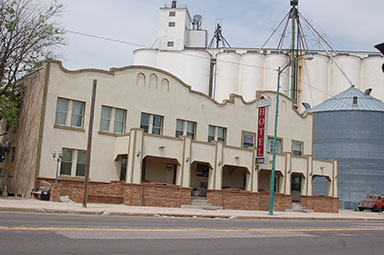
THE TOWN OF HOLYOKE
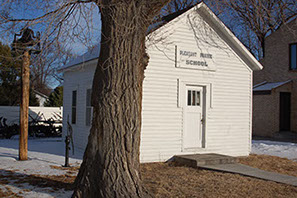
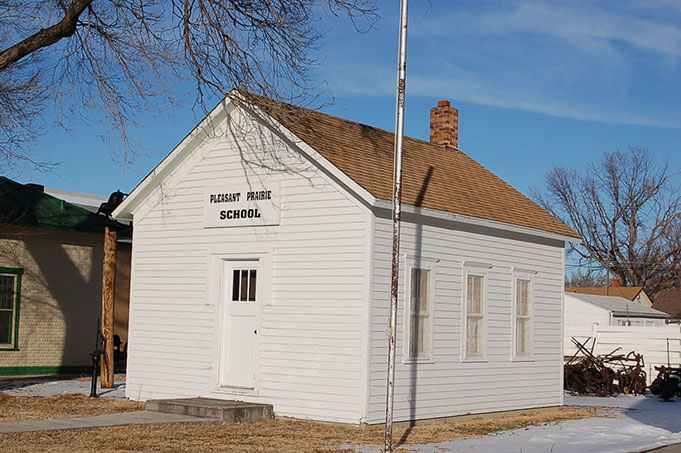
.jpg)
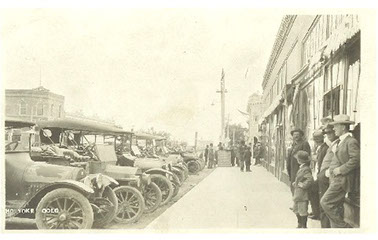
DOWNTOWN 1920'S COURTESY OF BETTY
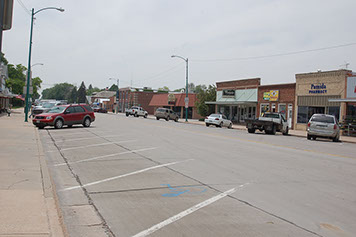
DOWNTOWN
If you have questions, contributions, or problems with this site, email:
Coordinator - Rebecca Maloney
State Coordinator: Rebecca Maloney
Asst. State Coordinators: Betty Baker
If you have questions or problems with this site, email the County Coordinator. Please do not ask for specfic research on your family. I am unable to do your personal research. I do not have access to additional records.