
a Proud part of USGenWeb®

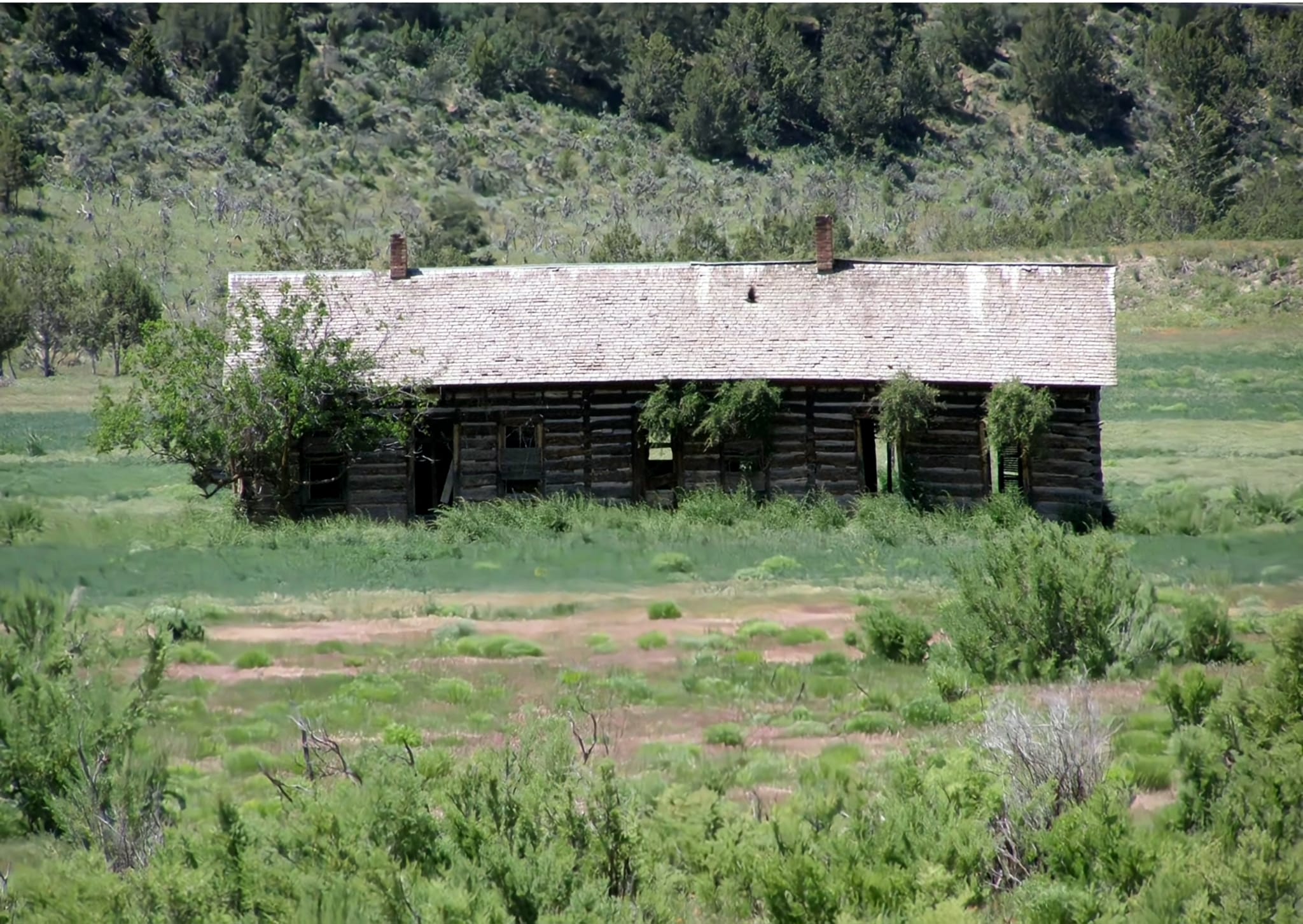
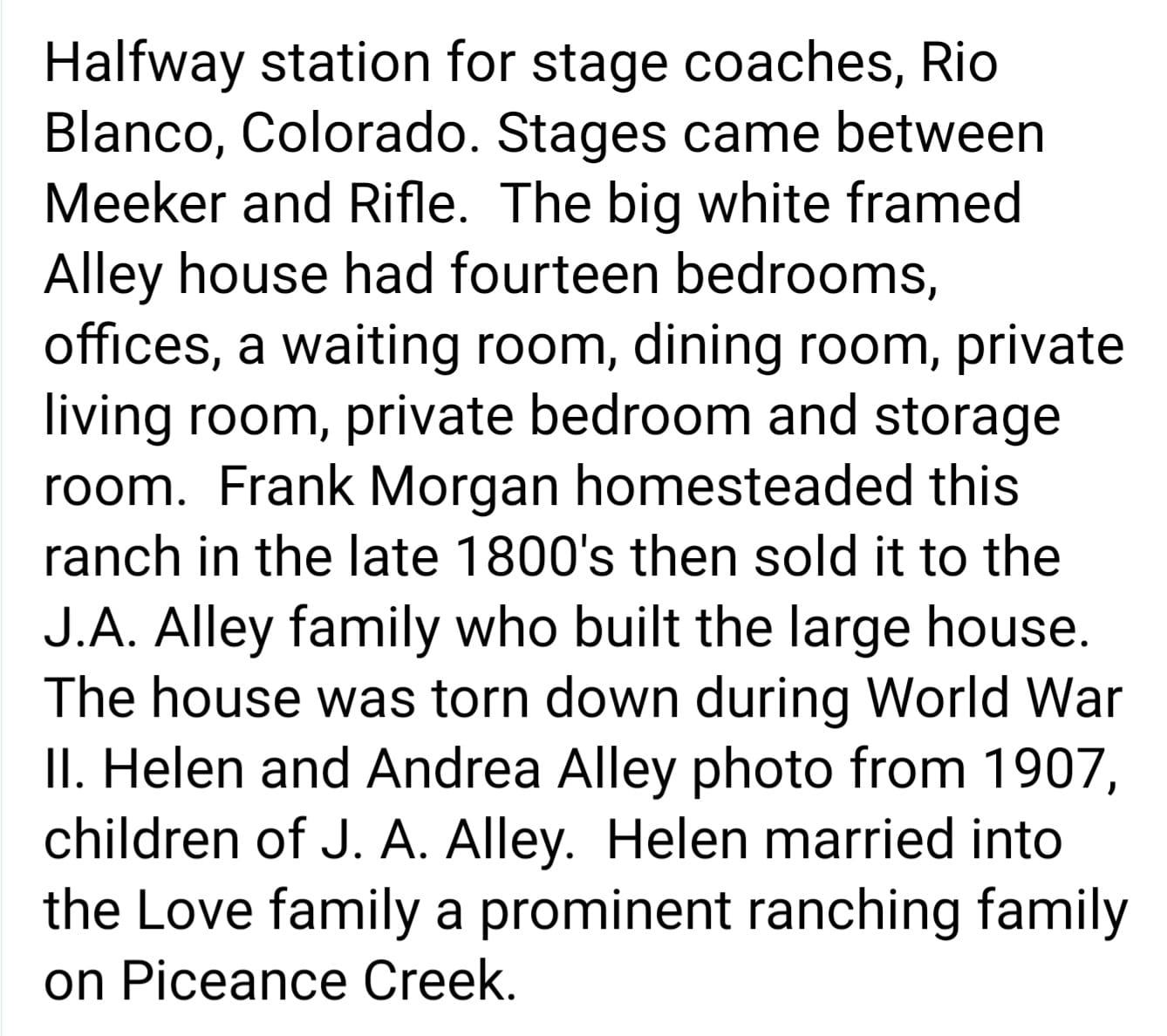
A relay station on the Rifle to Meeker stage line. Called the Long
House by the Harp family.
Located between Rifle and the Dinner
Station at Piceance Creek. It is located at mile 10.5 on Hwy 13 to
Meeker.
It is 1.5 miles past Dead Man curve on the left when you head
north. The property is owned by Aaron Woodward.
William Gilbert, the stage coach driver. And dissappeared dad.
William met his wife Etta Mabel Langstaff at the Rifle relay station,
also known as a swing station. And sometimes called the Magpie Station.
She was working there, maybe cooking, was 20 years old in 1912 when they
married. William was 23 according to marriage license. Subsequent
records vary. It appears he was actually 33 and had been married before.
He served in WWI, and lived in Colorado until about 1931. At that point
he walked away, moved to Wyoming, and left Etta and the family in
Colorado. He passed away in 1961. He had no contact with his family for
30 years.
Etta was an active member of the Rifle Creek Home
Demonstration Club that had a big impact on Rifle. She passed away in
1966. Etta is burried at Rose Hill. William is buried at Sheridan,
Wyoming.
Here are some references I have found-
From 102+ years
ago, here is the July 9, 1920 doing's on Rifle Creek.
Many relatives
of those named are members here.
William Gilbert is mentioned, his
wife was Etta Mable Langstaff. Besides Hilda, and Etta Mable, the rest
of Bart Langstaff's children were Lile, Leon, Ethel, Albert and Ira.
Bart's wife Etta had passed away in 1909. His oldest daughter Etta Mable
was 17 then, so she looked after the younger children.
 Map of the
Rifle Meeker Stagecoach stops
Map of the
Rifle Meeker Stagecoach stops

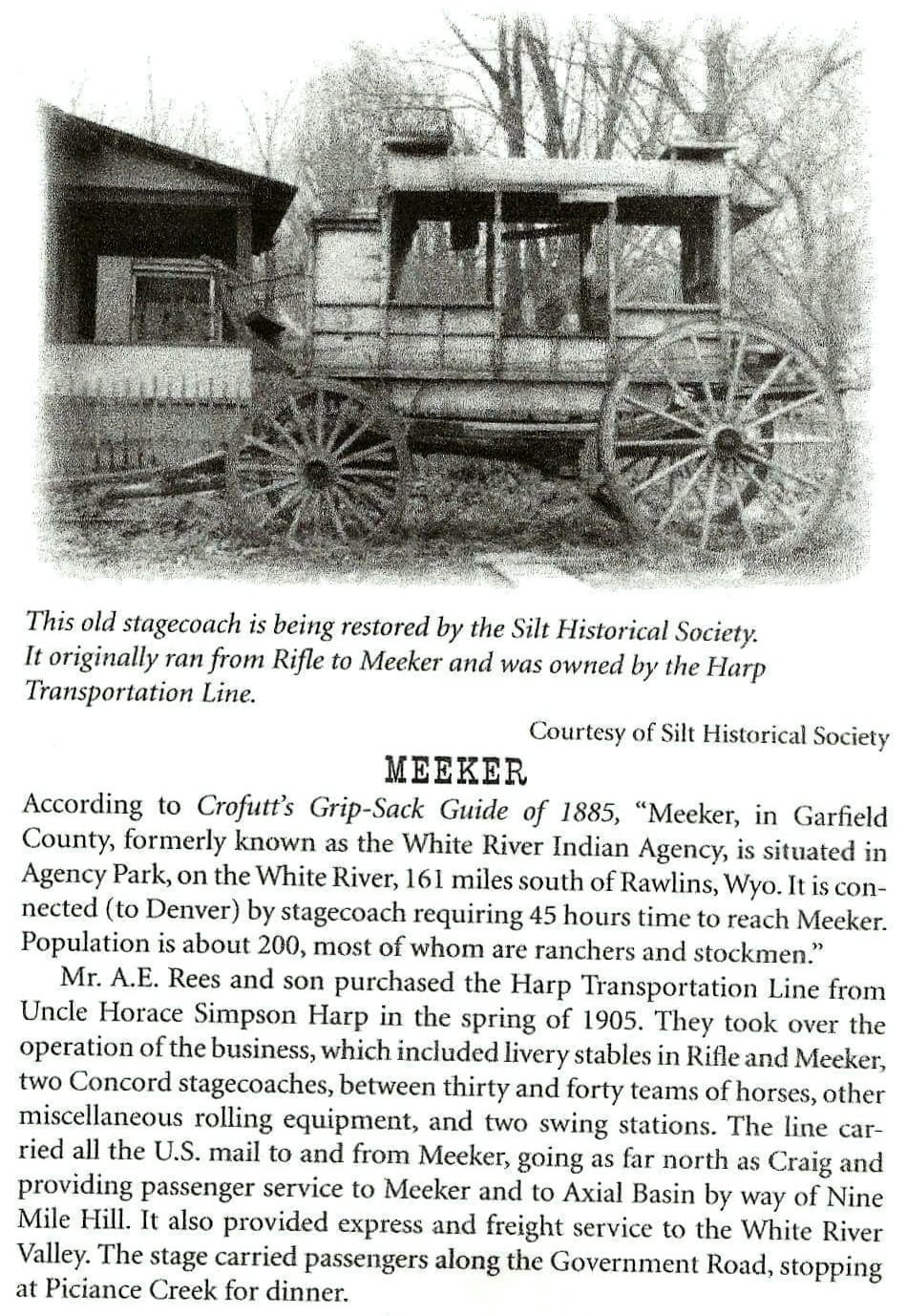
Freight Hauler on the stageline - Team of 12 horses tells you how heavy this load was.

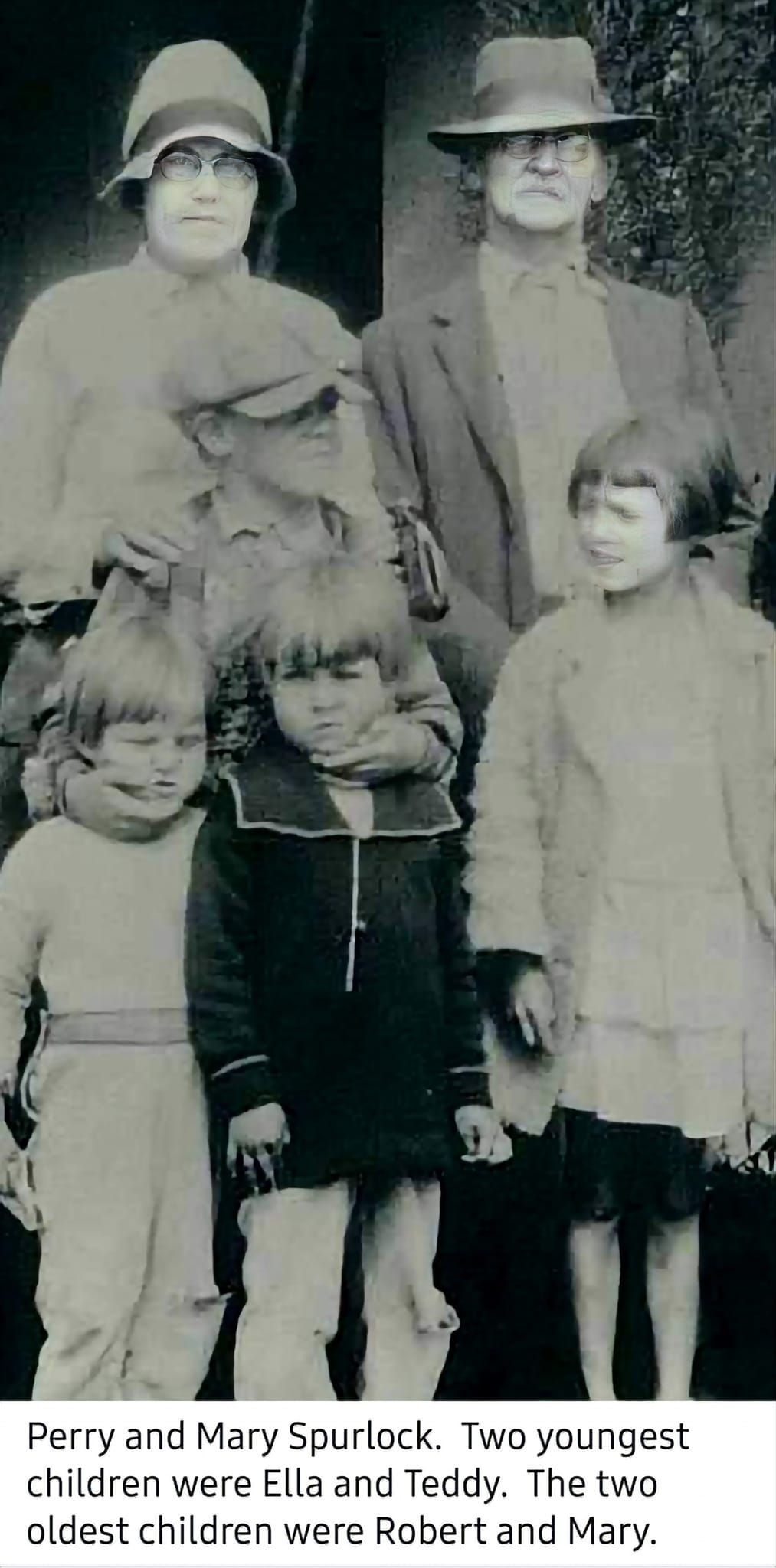
Perry and Mary Spurlock. Two youngest children were Ella and Teddy. The two oldest children were Robert and Mary.
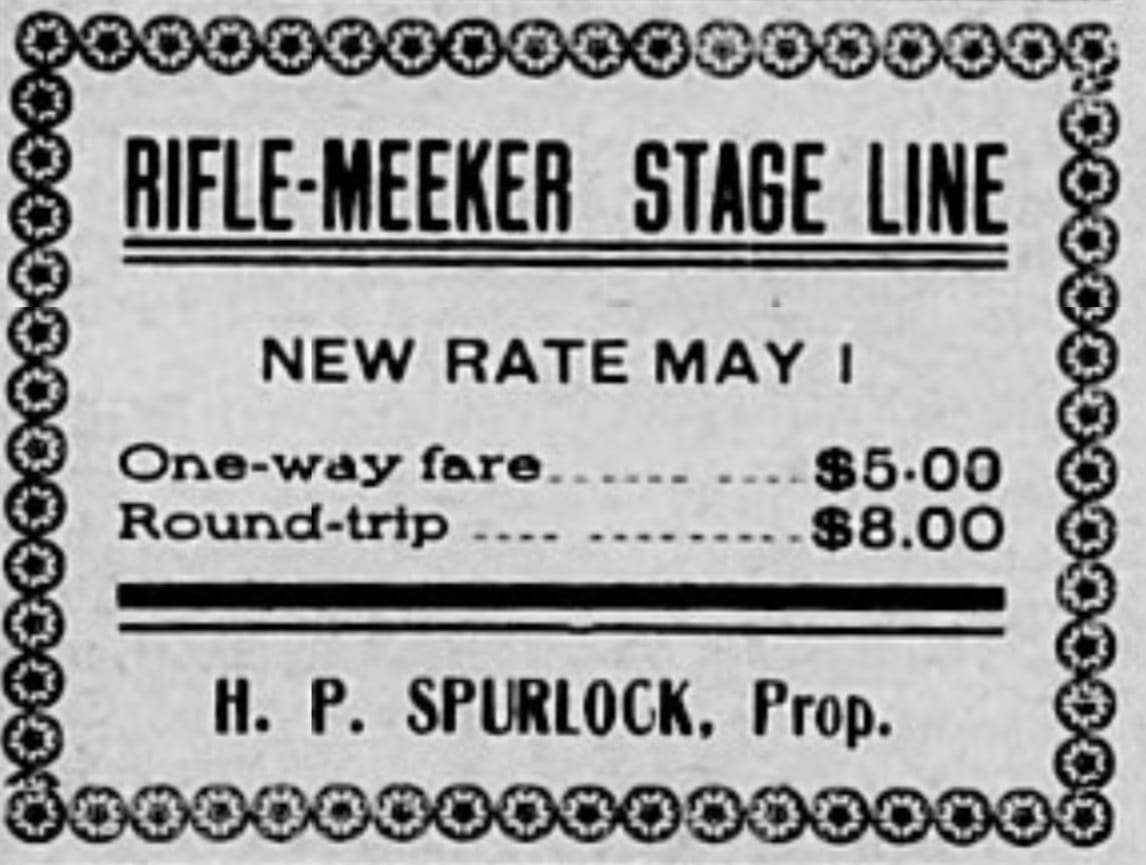
In the fall of 1909, Perry and Mary Spurlock acquired the Meeker
Rifle Stage Line.
He ordered two new Concord coaches special built in
Concord, New Hampshire. They were large coaches each weighing 2100
pounds and finally arrived July of 1910.
Perry named them Ella and
Teddy after his youngest daughter and son. His two older children were
Mary and Robert.
The coaches had a more or less rigid under frame.
Posts on all four corners extended up and supported the carriage body on
heavy leather straps. This cushioned the ride and gave a slight swaying
motion to the passengers.
The driver had to hang on to all the reins
while negotiating all the motion. Braking was difficult, and it was
probably best to have another person up there with a rifle.
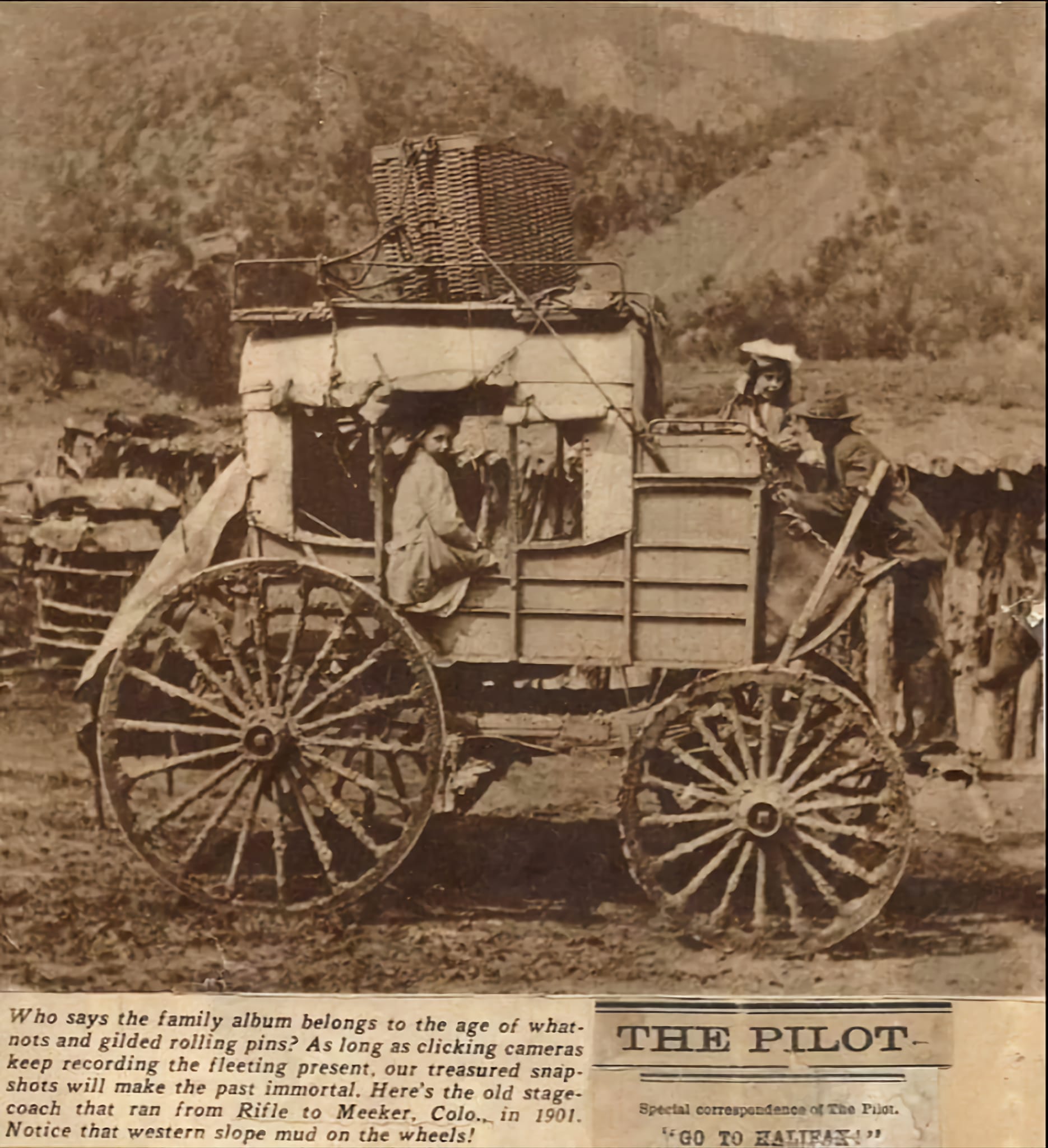
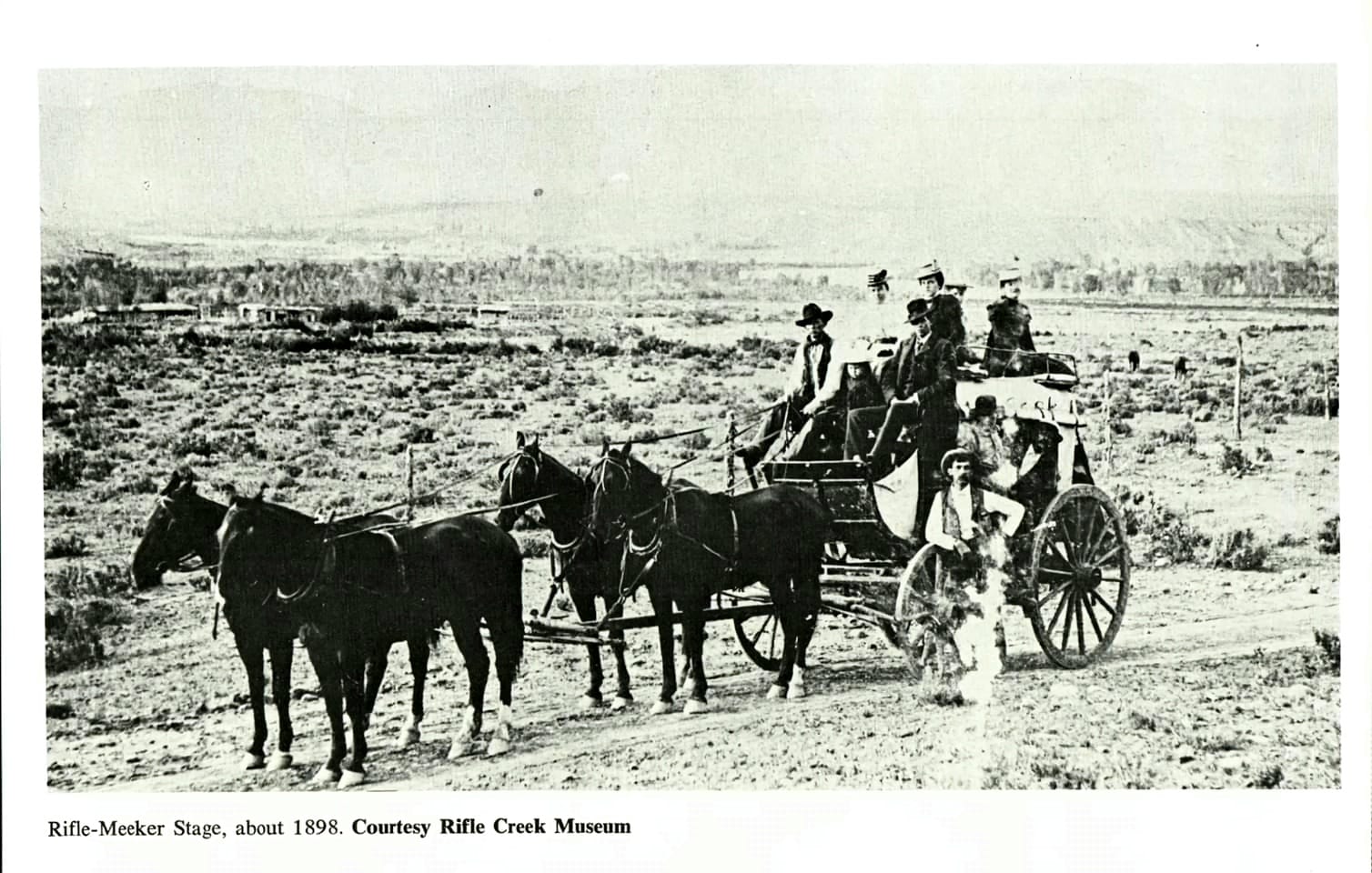
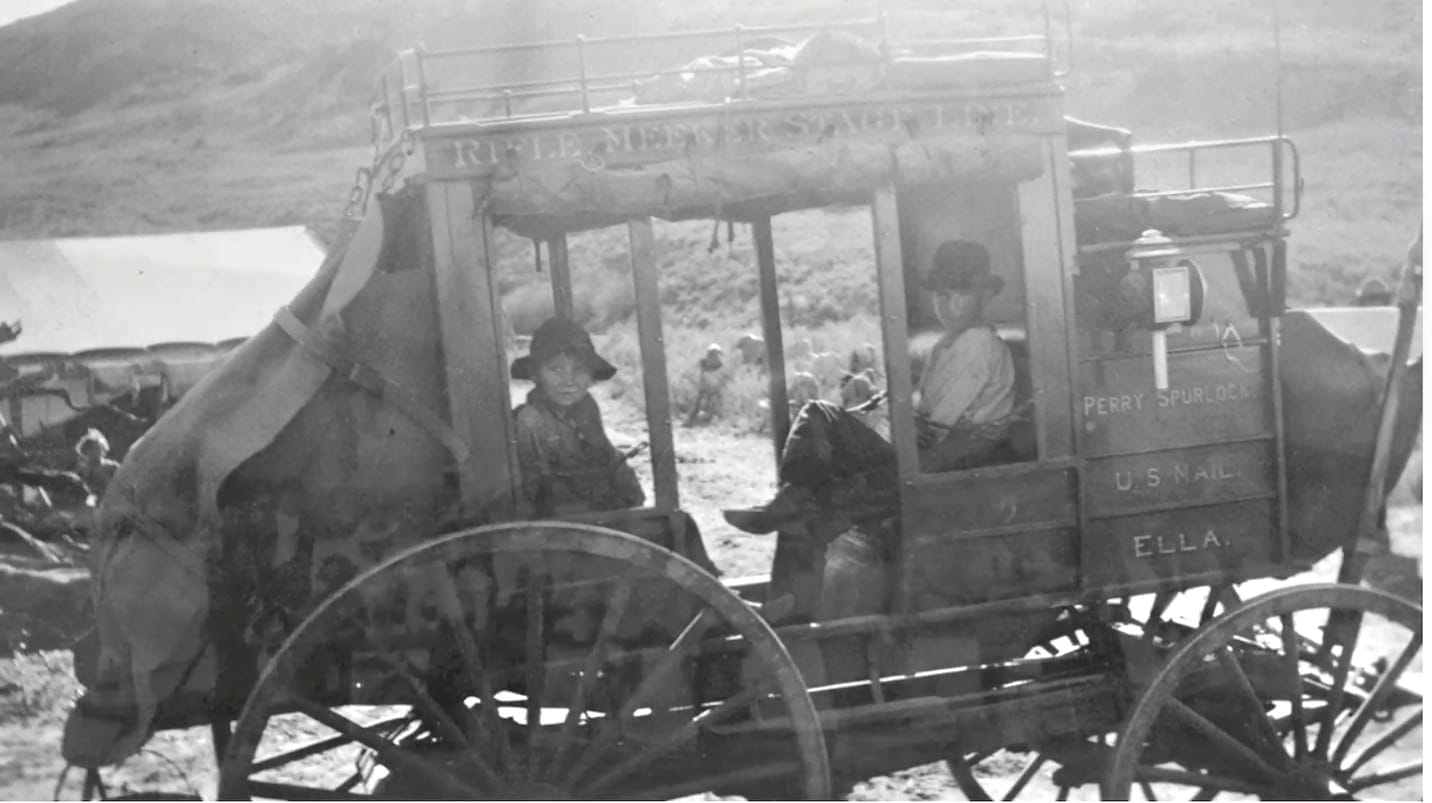

That is the coach Hiram Perry Spurlock named after his daughter, (Ella Spurlock, Williamson, Linderman) and his other coach was named after his son, Theodore, (Teddy, Ted). Ella and Teddy are in the picture on top.
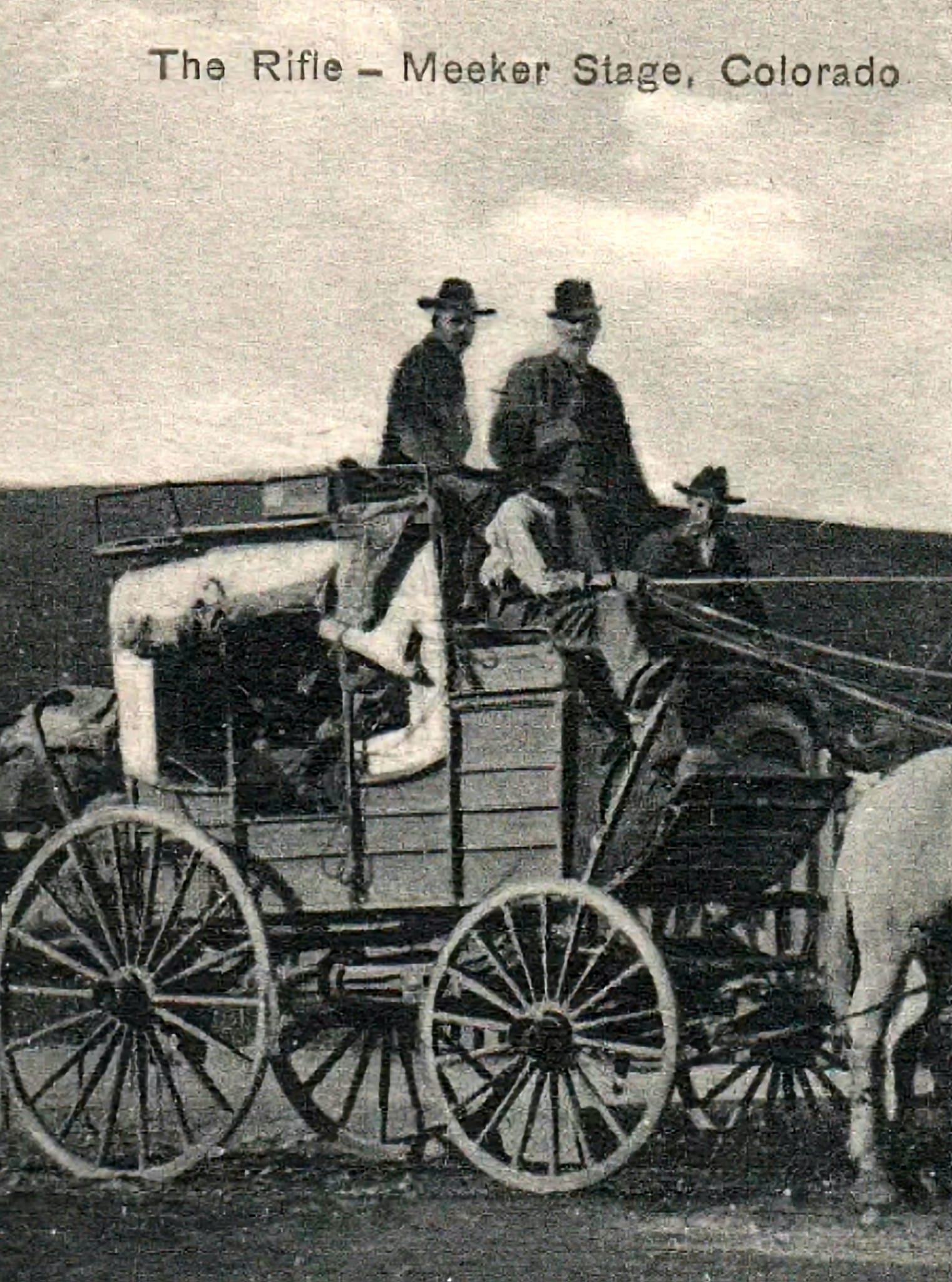
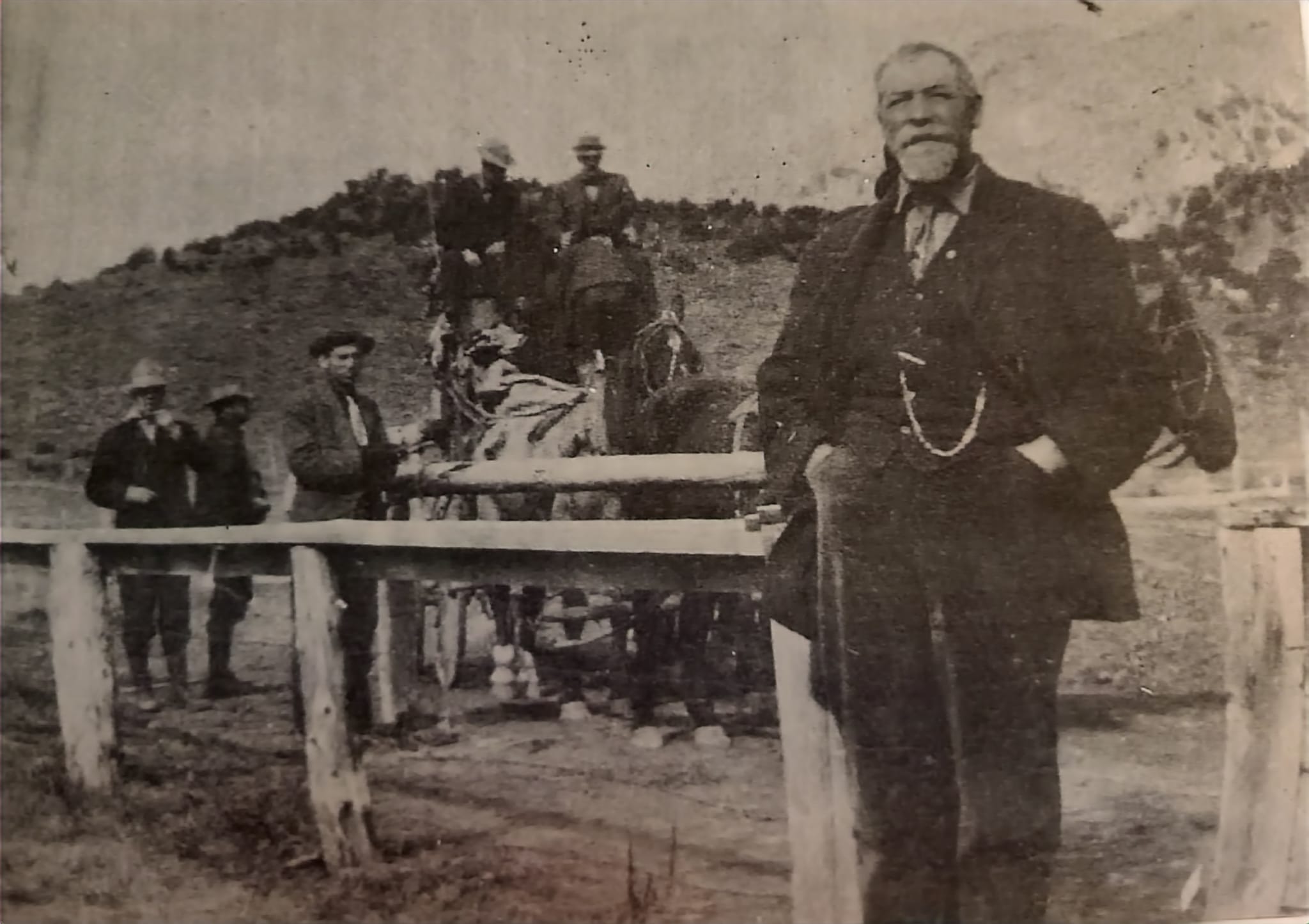
This is at the Relay Station on the Meeker side. Coach pulled in between rails, teams were switched out, and off they would go
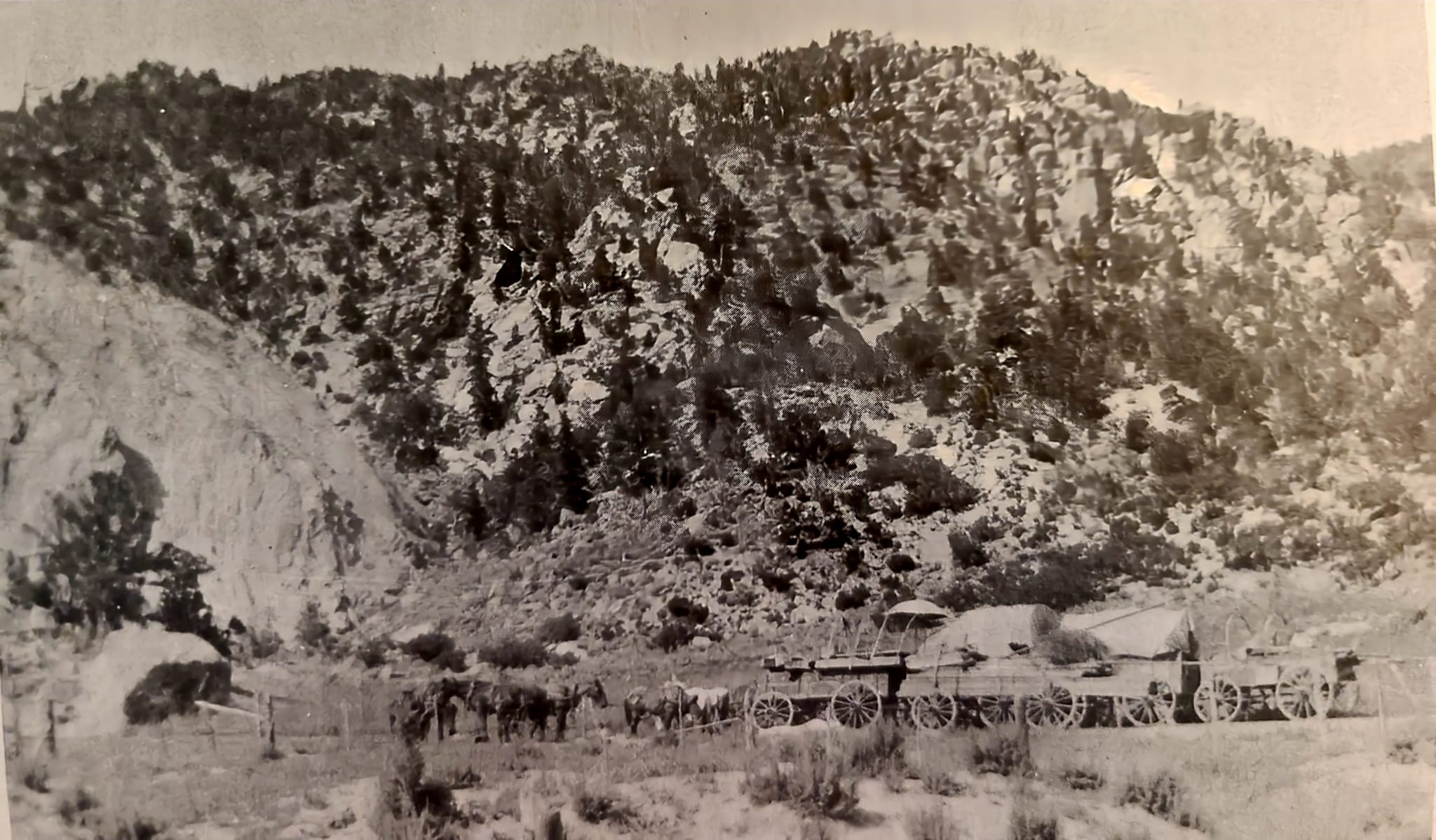
Taken from Dinner Station looking east

Meeker to the left - Rifle to the right 2 stages meeting at the Dinner Station
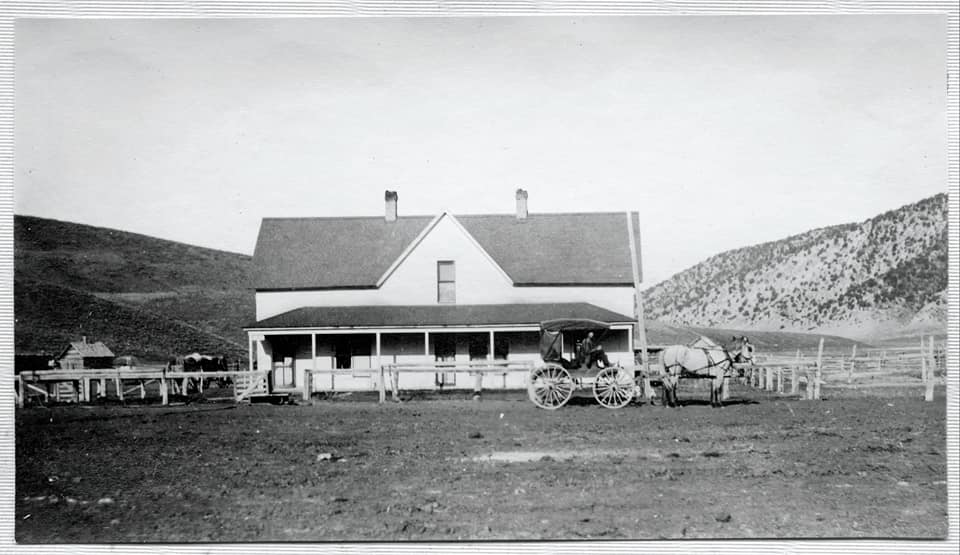
The Dinner Station at Piceance Creek Notice on both sides rails to drive the coach between. Makes changing the team simple

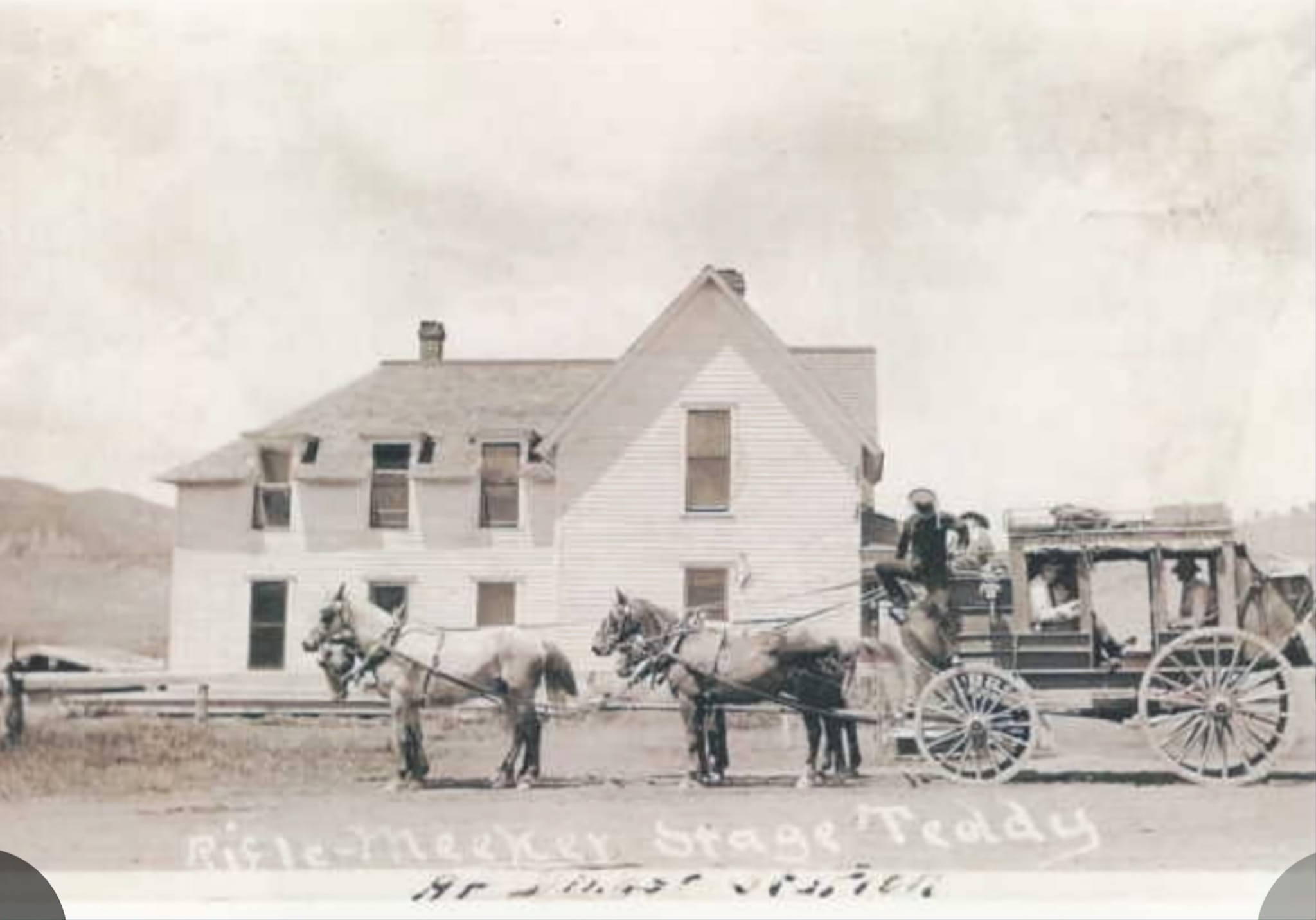
A Coach named Teddy
If you have questions, contributions, or problems with this site, email:
Coordinator - Rebecca Maloney
State Coordinator: Rebecca Maloney
Asst. State Coordinators: Betty Baker - M.D. Monk - Norma Hass
If you have questions or problems with this site, email the County Coordinator. Please to not ask for specfic research on your family. I am unable to do your personal research.